

The Philippine political landscape is currently witnessing a volatile and highly polarized phenomenon that has observers, critics, and the general public expressing a mixture of disbelief and frustration regarding the behavior of the staunchest supporters of the former administration. In a scathing commentary that has recently surfaced and gained traction across social media platforms, the so-called die-hard followers are being scrutinized for actions and rhetorics that are described as increasingly irrational, stubborn, and completely detached from the norms of civil discourse. The narrative emerging is one of a collective behavior that mirrors the controversial and often defiant style of the leader they revere, leading many to suggest that the fan base has essentially absorbed the personality traits of their idol, resulting in a chaotic environment that is becoming difficult to manage or reason with.
The criticism centers on the observation that these supporters, often referred to by their acronym, are no longer just engaging in political debate but are displaying a level of fanaticism that borders on the delusional. Commentators have pointed out that their refusal to accept facts, coupled with a tendency to aggressively attack opposing views, mimics the “pasaway” or hard-headed nature often attributed to their political patron. It is as if the disregard for rules and the penchant for shocking statements have trickled down from the top, creating a ripple effect where the followers feel emboldened to act with impunity. This dynamic has created a toxic atmosphere online and offline, where logical reasoning is often drowned out by noise, insults, and a steadfast refusal to acknowledge any wrongdoing or shortcomings within their camp.
Furthermore, the public sentiment suggests a growing fatigue with what is perceived as the “hallucinated” state of these supporters, who seem to be living in an alternate reality constructed by their leaders. The commentary highlights how this group often twists narratives to fit their agenda, regardless of the evidence presented to the contrary. This behavior is being likened to a contagion, where the aggressive and erratic style of the leader has “infected” the base, stripping away their ability to think critically or independently. The loyalty displayed is not based on policy or principle, but rather on a personality cult that demands absolute submission and defense, even when the actions being defended are questionable or detrimental to the national interest.
As the situation intensifies, the clash between this group and the rest of the public is becoming more pronounced. The “pasaway” attitude—a refusal to follow order or listen to reason—is causing friction in various sectors of society. Whether it is disregarding legal processes or spreading unverified information, the actions of these supporters are being viewed as a significant hurdle to national unity and progress. The fear among observers is that this behavior has become normalized, setting a dangerous precedent for future political engagement where loudness and defiance are valued over truth and cooperation. The narrative suggests that as long as the “master” continues to exhibit these traits, the followers will continue to emulate them, trapping the political discourse in a cycle of chaos and irrationality that shows no signs of slowing down.
News

TAY, BAKIT KA UMIİYAK? JOKE LANG NAMAN ‘YAN! PARA SA CONTENT LANG, HUWAG KANG OA!
Madilim pa ang paligid sa aming baryo sa Batangas, pero gising na gising na ang diwa ko. Ako si Mang…

SHOWBIZ SHOCKER: Entertainment Titan Vic Sotto Unleashes a Stinging Reality Check After Viral ‘Karen Carpenter’ Sound-Alike Reportedly Rejects a Major Contract Offer, Leaving the Industry and Fans Completely Baffled by the Sudden Turn of Events
In the competitive and often unforgiving world of the entertainment industry, receiving an offer from a heavyweight like Vic Sotto…

TEEN QUEEN’S HEARTBREAKING CONFESSION: Jillian Ward Finally Breaks Her Silence and Admits the ‘Sad Truth’ About Her Real Feelings for Boxing Prodigy Emman Bacosa, Leaving Millions of Fans Devastated by the Reality Behind the Romance Rumors
In the high-stakes, high-pressure world of Philippine show business, the public is always on the lookout for the next great…
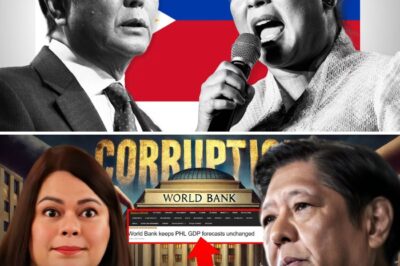
ECONOMIC SHOCKWAVE: World Bank Drops a Massive Bombshell That Shatters the Opposition’s ‘Doomsday’ Narrative as Shocking Data Reveals the Philippines is Defying Expectations and Winning Global Trust!
In a political climate often dominated by doom-scrolling and pessimistic forecasts from critics, a sudden and unexpected revelation from one…

POLITICAL MAYHEM ERUPTS: Explosive Leaked Audio and Video Allegedly Reveal Toby Tiangco’s Shocking Confession Exposing a Massive Conspiracy and Betrayal Inside the Palace—Is This the Final Nail in the Coffin for the Ruling Alliance?
The Philippine political landscape is currently in the throes of a violent convulsion as explosive allegations and leaked digital materials…

PALACE IN TOTAL PARANOIA: Shocking Reports Allege Military Personnel Entered the President’s Inner Circle Prompting a Desperate Emergency Meeting as Whispers of ‘President Sara’ Taking Over Reach a Fever Pitch
The usually composed and impenetrable façade of Malacañang Palace is reportedly cracking under the weight of intense paranoia and fear,…
End of content
No more pages to load