
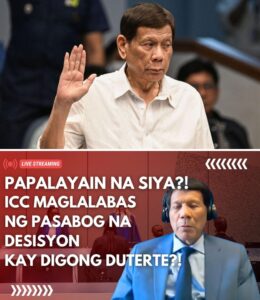
The international community and human rights advocates across the globe are currently in a state of suspended disbelief as whispers and reports begin to surface regarding a potential, shocking turn of events in the International Criminal Court’s (ICC) investigation into the Philippines. For years, the specter of a trial has hung over former President Rodrigo Duterte, stemming from his administration’s controversial and intense campaign against illegal substances—a campaign that allegedly resulted in the tragic loss of thousands of lives. However, recent developments have ignited a firestorm of speculation that the ICC may be moving towards a decision that effectively “frees” the former leader from immediate liability, a scenario that has left the families of victims devastated and asking a singular, painful question: has the world forgotten us?
The atmosphere in Manila is thick with tension as these rumors gain traction. For the mothers, wives, and children who were left behind in the wake of the operations, the ICC represented a beacon of hope—the final court of last resort when they felt the local justice system had failed them. The narrative that Duterte might evade prosecution due to technicalities, issues of jurisdiction, or a lack of cooperation from the current administration is being viewed not just as a legal setback, but as a moral catastrophe. It suggests that the geopolitical landscape and the protection of sovereignty are being prioritized over the fundamental human right to life and justice. The emotional toll on the surviving families is immeasurable, as they face the terrifying possibility that the stories of their loved ones will be buried under piles of bureaucratic paperwork and diplomatic immunity.
Adding salt to the wound is the perceived stance of the current government under President Ferdinand “Bongbong” Marcos Jr. While the administration has maintained a delicate balancing act, statements regarding non-cooperation with the ICC have emboldened the former President’s camp. This political shielding creates a fortress around Duterte, making it nearly impossible for international investigators to gather the necessary on-ground evidence to proceed. Critics argue that this is a calculated move to preserve political alliances at the expense of the truth. The concept of “pagpapalaya” or freeing Duterte is not necessarily about a verdict of innocence, but about the systemic inability to hold power to account. It sends a chilling message that in the game of thrones, the pawns—the ordinary citizens—are expendable.
The discourse has moved beyond legal arguments and into the realm of human tragedy. Documentaries and testimonies have showcased the raw grief of communities torn apart by the violence. Every day that passes without accountability is another day of injustice. If the ICC indeed steps back, it validates the fears of many that international justice is toothless against strongman leaders who retain popularity and political clout. The “freedom” of one man is being weighed against the sorrow of thousands, and the scales of justice appear to be tipping dangerously in favor of the powerful.
As the world waits for an official announcement, the outcry on social media and the streets continues to grow. This is no longer just a Philippine issue; it is a test of the international justice system’s integrity. If a leader can oversee a campaign that results in such massive loss of life and walk away without facing a judge, what precedent does that set for the rest of the world? The story of the victims is far from over, but the chapter on justice seems to be closing in the most heartbreaking way possible. The question remains echoing in the empty homes of the bereaved: if not the ICC, then who? And if not now, then when?
News

TAY, BAKIT KA UMIİYAK? JOKE LANG NAMAN ‘YAN! PARA SA CONTENT LANG, HUWAG KANG OA!
Madilim pa ang paligid sa aming baryo sa Batangas, pero gising na gising na ang diwa ko. Ako si Mang…

SHOWBIZ SHOCKER: Entertainment Titan Vic Sotto Unleashes a Stinging Reality Check After Viral ‘Karen Carpenter’ Sound-Alike Reportedly Rejects a Major Contract Offer, Leaving the Industry and Fans Completely Baffled by the Sudden Turn of Events
In the competitive and often unforgiving world of the entertainment industry, receiving an offer from a heavyweight like Vic Sotto…

TEEN QUEEN’S HEARTBREAKING CONFESSION: Jillian Ward Finally Breaks Her Silence and Admits the ‘Sad Truth’ About Her Real Feelings for Boxing Prodigy Emman Bacosa, Leaving Millions of Fans Devastated by the Reality Behind the Romance Rumors
In the high-stakes, high-pressure world of Philippine show business, the public is always on the lookout for the next great…
ECONOMIC SHOCKWAVE: World Bank Drops a Massive Bombshell That Shatters the Opposition’s ‘Doomsday’ Narrative as Shocking Data Reveals the Philippines is Defying Expectations and Winning Global Trust!
In a political climate often dominated by doom-scrolling and pessimistic forecasts from critics, a sudden and unexpected revelation from one…

POLITICAL MAYHEM ERUPTS: Explosive Leaked Audio and Video Allegedly Reveal Toby Tiangco’s Shocking Confession Exposing a Massive Conspiracy and Betrayal Inside the Palace—Is This the Final Nail in the Coffin for the Ruling Alliance?
The Philippine political landscape is currently in the throes of a violent convulsion as explosive allegations and leaked digital materials…

PALACE IN TOTAL PARANOIA: Shocking Reports Allege Military Personnel Entered the President’s Inner Circle Prompting a Desperate Emergency Meeting as Whispers of ‘President Sara’ Taking Over Reach a Fever Pitch
The usually composed and impenetrable façade of Malacañang Palace is reportedly cracking under the weight of intense paranoia and fear,…
End of content
No more pages to load