
The air outside the cremation grounds was thick with grief, curiosity, and tension. News of Dharmendra Ji’s passing had drawn fans, media, and fellow Bollywood legends, but all eyes were on one figure standing quietly near the gates: Hema Malini. The legendary actress, known for her poise and grace, seemed subdued, her usually radiant face now pale and shadowed with sorrow. Cameras captured her standing still, glancing occasionally toward the entrance, yet never stepping forward. Those who witnessed it later said there was an almost palpable weight in the air, a mix of public expectation, private grief, and unspoken questions.
Reports quickly spread: Hema Malini had reportedly not been allowed inside the cremation grounds. Speculation ran rampant—was it due to family decisions, security protocols, or perhaps unspoken tensions? The mystery only heightened the emotional gravity of the scene. Fans and onlookers whispered among themselves, their curiosity matched only by the actress’s dignified silence. Every movement, every subtle gesture became the subject of intense scrutiny.
Inside the cremation grounds, Dharmendra Ji’s family and close friends were gathered for the final rites. The atmosphere was heavy with grief and solemnity, punctuated by murmurs of prayers, the soft crackle of burning incense, and the rhythmic chanting of mantras. For those within the gates, the scene was both a tribute to a cinematic legend and a deeply personal farewell. Yet for Hema Malini, watching from outside, the experience was profoundly different—isolated, intimate, and emotionally complex.
Bobby Deol and Sunny Deol, Dharmendra Ji’s sons, were coordinating the proceedings. Their expressions, often stoic in public, revealed subtle signs of tension and unease. Some family members exchanged furtive glances toward Hema Malini, aware of her presence just beyond the gates. While the reasons for her exclusion were not immediately clear, the scene highlighted the complicated dynamics of celebrity families—layers of personal history intertwined with public scrutiny.
Hema Malini’s demeanor remained remarkably composed despite the unusual situation. Standing alone, she seemed lost in thought, her eyes occasionally glistening with tears, her lips pressed tightly together as if holding back a flood of emotion. Observers noted the subtle trembling of her hands as she clutched her handbag, a humanizing contrast to her public persona of elegance and control. For those witnessing, it was a rare glimpse into the actress’s private grief—a quiet yet powerful testament to her enduring bond with Dharmendra Ji.
The gates themselves became a symbol of separation. Inside, family members performed rituals, lighting the funeral pyre and offering prayers. Outside, Hema Malini’s silent vigil underscored the duality of public mourning versus private emotion. The cameras, restricted from capturing every moment inside, focused on her restrained movements, her occasional glances toward the ceremony, and the profound solitude she seemed to embrace. Each frame, each captured moment, told a story of longing, heartbreak, and unanswered questions.
Fans on social media immediately reacted to the images, posting clips and stills of the legendary actress standing outside. Questions erupted: Why wasn’t she allowed entry? Was there a disagreement with family members, or did protocol dictate her exclusion? The online community speculated endlessly, the scene fueling intense curiosity and debate. Yet amidst all the chatter, one fact remained clear: Hema Malini’s presence outside the cremation grounds added a deeply human layer to an event that was otherwise dominated by celebrity presence and public spectacle.
As the ceremony progressed, subtle interactions among family members became noticeable. Sunny Deol and Bobby Deol were observed glancing repeatedly toward Hema Malini, their expressions measured, their movements deliberate. It was a delicate balance—maintaining decorum for public cameras while managing personal emotions and navigating complex family dynamics. The presence of Hema Malini, a figure so integral to Dharmendra Ji’s life, intensified the emotional resonance of the day, highlighting the intersection of grief, respect, and unresolved tensions.
Several onlookers reported that Hema Malini occasionally spoke softly to herself, murmuring prayers or recollections of her time with Dharmendra Ji. Though the sound was faint, it was enough to convey the depth of her sorrow. Her posture, slight nods, and the occasional lifting of her hands in silent tribute painted a picture of profound personal grief, contrasted sharply with the controlled, ritualized proceedings inside the cremation grounds.
The emotional intensity outside was mirrored by media commentary. Analysts, reporters, and fans alike speculated about the implications of her exclusion. Some suggested it was a result of logistical considerations, others hinted at possible family tensions, while a few believed it reflected the intricate, sometimes hidden dynamics of Bollywood families. Regardless of the reasoning, the visual of Hema Malini standing alone, dignified yet sorrowful, became one of the most talked-about images of the day.
Meanwhile, inside the gates, the final rites reached their peak. The funeral pyre burned steadily, the flames symbolic of both Dharmendra Ji’s life and the collective grief of all who mourned him. For Hema Malini, watching from outside, the scene was intimate in a different way—her solitude magnified every emotion, every memory, every shared moment with Dharmendra Ji. Observers later remarked that the contrast between the public rituals and her private mourning created a powerful, almost cinematic tableau, emblematic of both her personal loss and the enduring intrigue of Bollywood legends.
By late afternoon, as the ceremony neared its end, Hema Malini remained quietly in place, her presence unwavering. Fans described her as “a pillar of silent strength,” capturing both admiration and empathy. Though she could not participate in the rites directly, her vigil became a profound statement—a reflection of grief, dignity, and the emotional complexity of losing someone whose life had intertwined with hers for decades.
The first part of this emotional narrative closes with Hema Malini standing as the cremation flames cast a distant glow, the wind carrying the smoke of rituals into the sky. Her gaze remained fixed, unwavering, silent, a testament to private grief observed by the public eye, a moment that would be remembered and speculated upon for years to come.
As the cremation ceremony continued, the focus inside the gates was on solemn rituals and the careful orchestration of a farewell befitting a cinematic legend. Yet outside, Hema Malini’s quiet presence became the unexpected focal point. Her composed posture contrasted sharply with the visible grief of other family members inside, highlighting a complex emotional divide. Observers noted the subtle tension in the air—an unspoken acknowledgment that while Dharmendra Ji’s life was celebrated publicly, private relationships and past histories added layers of intricacy to the proceedings.
Bobby Deol and Sunny Deol, Dharmendra Ji’s sons, moved with a careful deliberation, aware of media scrutiny and the fragile dynamics surrounding Hema Malini’s exclusion. Though their expressions were restrained, every glance and movement suggested an inner negotiation of emotions—balancing respect for their father’s legacy, attention to family protocol, and sensitivity toward Hema Malini, whose presence outside the crematorium could not be ignored.
Hema Malini herself remained a study in controlled grief. She occasionally adjusted her sari, took deep breaths, and lifted her hands in brief, silent gestures of prayer. Yet despite her composure, there was an undeniable vulnerability. Her eyes glistened with unshed tears, her lips quivered slightly, and her gaze seemed alternately fixed on the distant pyre and lost in memories of decades shared with Dharmendra Ji. Each observer sensed the weight of unspoken emotions—the grief of loss intertwined with the sting of exclusion from the final rites.
Inside, the family performed the customary rituals with solemn reverence. Photographs of Dharmendra Ji adorned the ceremonial space, capturing decades of cinematic achievement, personal triumphs, and moments of familial intimacy. As prayers were recited, subtle interactions occurred among family members. Hema Malini’s absence from the rituals prompted brief but noticeable exchanges of glances between Sunny and Bobby, suggesting unspoken deliberations about protocol, respect, and personal sentiment.
Meanwhile, the media and fans outside speculated endlessly about the reasons behind Hema Malini’s separation from the main ceremony. Some suggested it was a security measure; others whispered about possible family disagreements or deeper personal conflicts. Regardless of the truth, the aura surrounding her silence amplified the emotional intensity of the day. Every subtle movement—the lowering of her eyes, the faint tremor of her hands, the gentle shifting of weight from foot to foot—became a visual narrative of grief, restraint, and the complex reality of celebrity life.
Hema Malini’s vigil also became a moment of reflection for attendees and onlookers. Many described a sense of shared empathy, even among strangers who had gathered to pay tribute to Dharmendra Ji. There was an unspoken understanding that grief does not always follow conventional boundaries—that even someone so intimately connected to the deceased might face barriers in participating in public rituals. Her presence outside, dignified yet solitary, added a layer of poignancy that contrasted with the carefully managed choreography inside the cremation grounds.
Throughout the ceremony, subtle gestures conveyed volumes. Hema Malini occasionally bowed her head in silent respect, clasped her hands together, or raised them slightly in prayer. Each action, while understated, revealed deep emotion. Observers later noted that the aura she projected was both heartbreaking and dignified, a reflection of private sorrow witnessed publicly. This duality—grief restrained yet palpable—underscored the intricate human drama unfolding beyond the cameras’ immediate focus.
At intervals, family members inside glanced toward the gates where Hema Malini stood. Her presence was acknowledged silently, with restrained nods or fleeting eye contact. These moments carried complex emotional significance: respect, regret, and recognition of shared history, all conveyed without words. The contrast between the bustling ceremonial rituals and her quiet, solitary vigil highlighted a tension both subtle and profound, capturing the emotional essence of private grief intersecting with public expectation.
Fans and social media observers dissected every frame of footage captured outside. Comments ranged from sympathetic to speculative, as viewers attempted to interpret her emotions, the reasons for her exclusion, and the broader implications for the Deol family. The uncertainty surrounding the situation only heightened curiosity, leaving the public hungry for clarity while simultaneously emphasizing the deeply human, often opaque dimensions of celebrity life.
As the funeral pyre burned steadily inside, Hema Malini’s gaze remained fixed, alternating between the distant flames and reflective recollections of past moments with Dharmendra Ji. She seemed to relive decades of shared experiences—public triumphs, personal conversations, and quiet, intimate gestures that were now memorialized in absence. The solitude of her vigil contrasted sharply with the collective mourning inside, yet somehow harmonized emotionally, creating a poignant tableau that spoke to resilience, loss, and the unspoken complexities of love and family.
Several witnesses later reported subtle interactions between Hema Malini and other figures outside the crematorium. Friends and distant family members approached quietly, offering words of condolence or silent gestures of support. She received these with gentle nods or slight bows, maintaining composure while conveying gratitude. Each interaction, though brief, reflected an intricate dance of respect, emotional restraint, and personal mourning.
As the afternoon waned, the cremation rituals approached their conclusion. The symbolic significance of the flames, the prayers, and the ceremonial actions reverberated across the grounds. Outside, Hema Malini remained in place, her presence understated yet undeniably powerful. The visual of her standing alone, observing from a distance, became emblematic of the nuanced, often private struggles inherent in public life—moments where personal grief meets societal expectation and media scrutiny.
As the cremation rituals neared their final moments, the emotional intensity inside the grounds reached a peak. Family members were engaged in the concluding prayers, lighting incense, and offering the last symbolic gestures of farewell. The flames of the funeral pyre flickered, casting a warm, almost golden glow over the scene, yet outside, Hema Malini’s vigil remained the focal point for cameras and onlookers alike. Every subtle motion—the slight shift of her weight, the trembling of her fingers, the downward tilt of her head—conveyed the profound sorrow and silent dignity that characterized her presence throughout the day.
For Dharmendra Ji’s sons, Sunny and Bobby Deol, the final moments were fraught with unspoken complexity. They carried the weight of orchestrating the ceremony, managing family expectations, and addressing public scrutiny, all while grappling with the delicate reality of Hema Malini standing outside. Occasionally, their glances toward the gates revealed fleeting emotions: respect, concern, and perhaps a recognition of the intricate history shared between Hema Malini and their father. These small, almost imperceptible interactions underscored the subtle tensions and layered emotions permeating the proceedings.
Hema Malini herself seemed suspended between grief and reflection. She had stood quietly for hours, observing the final rites from a distance, her body language composed yet resonant with emotion. Witnesses later described the actress as embodying a rare mixture of restraint, vulnerability, and dignity. Her gaze occasionally shifted upward to the sky, perhaps silently connecting with Dharmendra Ji’s memory, as if bridging the physical distance imposed by the gates with an intimate emotional presence.
The media captured fleeting moments of subtle interaction between Hema Malini and those outside the crematorium who approached to offer condolences. Her acknowledgment was minimal—a slight nod, a barely perceptible smile—but her eyes told a story of grief, resilience, and quiet strength. These brief exchanges, though understated, carried the weight of decades-long history and a complex network of personal and professional relationships, giving the day an additional layer of human drama beyond the formal rituals taking place inside.
As the pyre burned, the family began the final stages of the ceremony. Prayers continued, interspersed with whispered recollections of Dharmendra Ji’s life, his cinematic achievements, and his role as a father and mentor. Inside, Hema Malini’s absence was noted quietly by relatives, yet outside, her presence created a visual narrative of respect intertwined with sorrow. Her solitude contrasted starkly with the controlled ceremonial environment inside, underscoring the tension between public spectacle and private emotion—a theme that had quietly dominated the day.
At one point, Bobby Deol glanced once more toward Hema Malini, a mixture of emotions flickering across his face. It was not anger or resentment, but a complex acknowledgement of the past, the present, and the intricate web of relationships that defined his father’s legacy. Sunny Deol mirrored a similar expression, their silent communication reflecting the delicate balancing act required when personal history intersects with public ceremony. For viewers and fans watching from afar, this unspoken drama added layers of intrigue and emotional depth to an already poignant event.
Finally, as the funeral rituals concluded and the flames subsided, Hema Malini began to move. Her departure was quiet, deliberate, and dignified. She adjusted her sari, clasped her hands once more, and took a slow, measured step away from the gates. Onlookers and fans noticed the faint tremor in her voice as she whispered a silent goodbye, the act of leaving symbolizing both the end of a public chapter and a deeply private moment of grief. Each step was both literal and symbolic, bridging the divide between personal sorrow and public visibility.
The reactions of family members to her departure were subtle yet telling. Some offered silent nods of acknowledgment, others kept their gaze lowered, perhaps out of respect or lingering tension. The scene was a delicate interplay of emotions: grief, respect, unresolved questions, and the quiet reconciliation of past histories. While no dramatic confrontations were visible, the emotional undercurrent spoke volumes, revealing the unspoken dynamics that often define relationships in the glare of fame.
Outside the cremation grounds, fans and media continued to speculate. The footage of Hema Malini standing alone, then walking away, quickly went viral. Social media was flooded with theories: Why was she not allowed inside? Were there lingering family disagreements? Was it a matter of protocol, or something deeper and more personal? Each frame was dissected, every gesture analyzed, and every glance theorized upon. The public curiosity mirrored the private complexity of the moment, emphasizing how celebrity life often conceals layers of emotion invisible to the broader audience.
Despite the speculation, those present noted Hema Malini’s dignity. Her composure, even in isolation, transformed her exclusion from the main ceremony into a testament to personal resilience. Observers remarked that her quiet strength contrasted beautifully with the orchestrated rituals inside, creating an emotional narrative that was both heartbreaking and inspiring. The moment captured not just grief, but also the human capacity for grace, understanding, and silent tribute.
By the time Hema Malini departed entirely, the cremation grounds had begun to empty. The echoes of prayers, the lingering scent of incense, and the fading glow of the pyre marked the close of a day heavy with emotion. For the family, friends, and public, the event was a blend of mourning, remembrance, and subtle drama. For Hema Malini, it was a deeply personal farewell, a solitary vigil rendered poignant by circumstance, history, and emotion.
As the sun dipped below the horizon, the memories of the day lingered. The image of Hema Malini standing alone outside, observing the final rites of a man who had been central to her life, became emblematic of the hidden complexities of Bollywood families. Her departure marked the conclusion of a narrative rich in grief, respect, unresolved tension, and human resilience—a story that would be discussed, speculated upon, and remembered for years to come.
The funeral of Dharmendra Ji ended, but the emotional resonance of Hema Malini’s vigil remained etched in the minds of those who witnessed it. Cameras may have captured only fragments, but those fragments conveyed the depth of sorrow, the power of dignity, and the layered complexity of human relationships behind the glittering facade of celebrity life. It was a farewell that transcended ritual, a quiet testament to love, loss, and the subtle, often hidden dramas that define even the most iconic lives.
News

Bigg Boss 19 Shocker: Tanya Throws Ink at Farrhana
The Bigg Boss 19 house had been simmering with tension all morning. The contestants moved around cautiously, aware that the…

Bigg Boss 19 Weekend Ka Vaar Promo: Shocking Eviction Revealed
The Bigg Boss 19 house had never felt so tense. The morning sunlight filtered through the windows, casting long shadows…

Shock in Dharmendra’s Family as Last Will Revealed
The room was heavy with anticipation. A single, unassuming envelope sat on the polished wooden table in Dharmendra’s family home,…

Bigg Boss 19 Shocker: Farrhana Throws a Mug at Tanya
The Bigg Boss 19 house had always been a pressure cooker of emotions, but today, the atmosphere was thick with…
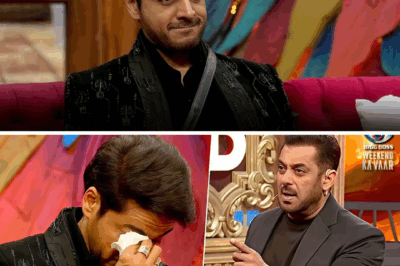
Bigg Boss 19 Shock: Salman Khan Offers Gaurav a Role in His Next Movie
The Bigg Boss house was already buzzing with anticipation as the weekend episode approached. Contestants were aware that Salman Khan’s…
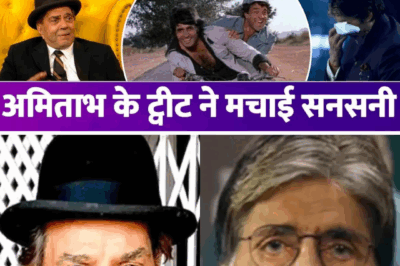
Amitabh Bachchan Breaks Down Over Dharmendra Ji’s Death: Emotional Tweet Sparks Sensation
The news of Dharmendra Ji’s passing had sent shockwaves through Bollywood and the nation. Among the many mourning the legendary…
End of content
No more pages to load