
The Bigg Boss 19 house had been simmering with tension all morning. The contestants moved around cautiously, aware that the events of the day could change the dynamics dramatically. Every glance, every whispered word, and every interaction was loaded with meaning. Alliances were fragile, rivalries simmering, and emotions stretched to the breaking point. The air seemed thick, almost tangible, with anticipation and unspoken anxiety.
Tanya sat on the sofa, her gaze fixed on Farrhana, who was busy organizing her area. The two had clashed multiple times in the previous weeks—strategic disagreements, subtle provocations, and personal jabs that had slowly built into a simmering tension. Tanya’s eyes followed every movement, every gesture, noting what could be used to her advantage. Her mind raced, strategizing how to assert dominance without appearing vulnerable.
Farrhana, oblivious to Tanya’s intense observation at first, hummed softly while arranging her items. But she was not entirely unaware; subtle glances had told her that Tanya’s attention was more than casual. There had been minor arguments earlier in the week, and though both women had tried to maintain civility, an undercurrent of competition had been steadily building. Today, the tension felt different—more immediate, more combustible.
Gaurav noticed the tension and tried to maintain neutrality, sensing that any involvement could backfire. However, he could not ignore the subtle signs of escalation. Tanya’s eyes were fixed on Farrhana with a sharp intensity, one that Gaurav had learned over the weeks often preceded dramatic actions. The atmosphere was taut, as if the house itself was holding its breath in anticipation.
Meanwhile, other contestants exchanged quiet observations, noting the brewing conflict. Some were anxious, worried about potential fallout, while others were quietly excited, anticipating drama that could shift alliances and stir audience interest. In the Bigg Boss house, moments of conflict were as influential as victories in tasks, shaping perceptions and power dynamics in profound ways.
The first spark came when Tanya confronted Farrhana over a minor disagreement about household chores. The exchange began calmly but quickly escalated. Words sharpened, voices rose, and the competitive tension between them became evident to everyone present. Other housemates watched from a distance, some stepping closer to mediate, others staying back, sensing that the confrontation was about to erupt.
Tanya’s gestures grew more pronounced. Her frustration, carefully bottled in prior weeks, was now spilling over. Farrhana responded in kind, defending herself with equal intensity. The verbal sparring continued, punctuated by sarcastic remarks and pointed looks. It was clear to all that this was not merely a disagreement—it was the culmination of weeks of unresolved tension, strategy clashes, and personal rivalry.
Then, in a moment of impulsive boldness, Tanya grabbed a container of black ink that had been used for a task earlier. The action was sudden, deliberate, and shocking. Housemates gasped as Tanya hurled the ink directly at Farrhana’s face. The splatter was immediate, dark, and dramatic, catching everyone off guard. Shock rippled through the house; even contestants accustomed to high drama were stunned by the audacity of the act.
Farrhana froze, disbelief written across her face. Her eyes widened, mouth slightly agape, as the cold ink dripped down her skin. The room erupted in chaos: some contestants shouted, others rushed to intervene, while a few simply stood, unable to comprehend what had just happened. Cameras captured every moment—the ink, the expressions, the rapid shift from calm tension to explosive conflict.
Gaurav and a few others stepped in quickly to separate the two women. Tanya, still brimming with adrenaline, attempted to justify her actions, her voice rising above the commotion. “You’ve been manipulating situations all week!” she shouted. “I’ve had enough of your games!” Farrhana, dripping in ink and shaking, retorted, her own voice a mixture of anger and disbelief. “This is beyond the line! You can’t do this!”
The housemates now faced a complex situation. The act of throwing ink was more than just a personal attack; it symbolized the intensity of competition and the breaking point of pent-up emotions in the Bigg Boss environment. Discussions, arguments, and attempts to mediate created a cacophony of voices. Alliances were scrutinized anew, with housemates questioning loyalties, intentions, and potential repercussions for their own standing in the game.
Even outside the immediate conflict, the psychological impact was profound. Tanya’s boldness and Farrhana’s emotional response would influence audience perception, future votes, and the social dynamics within the house. Every action in Bigg Boss 19 carries weight beyond the immediate moment, and this incident was a stark reminder that personal emotions can escalate into public spectacle, with strategic consequences for everyone involved.
By the end of this first chaotic phase, the house had shifted from tense anticipation to full-blown drama. The room smelled faintly of ink, but the tension was palpable long after the initial throw. Housemates whispered in corners, speculated about motives, and recalculated strategies. Tanya retreated briefly, catching her breath and attempting to regain composure, while Farrhana cleaned herself as best as possible, processing both humiliation and anger.
The day’s events had already set a new tone for the house. Alliances that had seemed stable were now questioned. Subtle friendships were reevaluated. Contestants understood that Bigg Boss was not just a game of tasks and popularity—it was a contest of emotional resilience, psychological acuity, and the ability to navigate unpredictable human behavior.
Even as calm appeared to return superficially, undercurrents of tension continued to ripple through the house. Every glance, every conversation, and every action in the following hours would be influenced by this explosive event. The ink incident was more than a spectacle—it was a game-changer, rewriting the dynamics of the house and reshaping strategies for the upcoming days.
The house was in chaos after Tanya’s shocking act of throwing ink at Farrhana. The initial gasp of surprise had given way to frantic whispers, hushed arguments, and attempts to process the unexpected eruption of emotion. Housemates clustered in small groups, some trying to mediate, others discussing quietly how the incident could affect their own game strategy.
Farrhana, still dripping with black ink, was visibly shaken. Her eyes burned with a mix of anger and humiliation. She paced the room, trying to regain her composure while replaying the incident in her mind. Every glance at Tanya reignited the surge of adrenaline, reminding her of the intensity of their rivalry. The incident had escalated tensions that had been simmering for weeks into a full-blown emotional storm.
Tanya, on the other hand, was exhilarated yet anxious. She had crossed a line but had made her mark in the house undeniably. Housemates observed her closely, reading her body language, testing her intentions, and wondering if this bold move would elevate her position or isolate her. In Bigg Boss 19, a single dramatic action could change alliances overnight, and Tanya was acutely aware of the risks she had taken.
Gaurav attempted to step in as a mediator. He approached both women cautiously, trying to calm the storm without taking sides. “This isn’t the time to escalate things further,” he said, his voice steady but firm. “We need to discuss this calmly, or it will spiral out of control.” Some housemates nodded in agreement, while others whispered in corners, analyzing the potential fallout.
The incident immediately became the central topic of conversation. Contestants speculated about motives, questioned loyalty, and debated whether Tanya’s act had been a calculated move to assert dominance or an emotional outburst. Every small detail—the way the ink splattered, the timing, the reactions—was dissected with a strategic lens. In Bigg Boss, drama is both spectacle and weapon, and housemates quickly recognized that today’s incident could influence votes, alliances, and audience perception.
Farrhana, now partially cleaned up, confronted Tanya directly. Voices were raised again, this time in a more controlled but equally tense exchange. Accusations flew: betrayal, manipulation, disrespect. Housemates who had been silent now stepped in, some defending Farrhana, others subtly supporting Tanya’s aggressive stance. The room crackled with tension, the air thick with emotion and strategy intertwined.
Meanwhile, Tanya whispered to her allies in a secluded corner. “This changes everything,” she said. “Now people see who I am willing to challenge. This is about power, not just revenge.” Her words reflected a careful balance of bravado and calculation. She knew that perception in the house and with the audience could be as critical as actual gameplay.
Across the house, Farrhana strategized with her own allies, seeking to turn the event to her advantage. “We need to stay calm, show resilience,” she advised. “The audience watches everything. They respect composure under pressure.” She was aware that any visible anger or loss of control could harm her standing, so her approach combined emotional recovery with strategic positioning.
Other housemates adjusted their strategies as well. Some sought to mediate and remain neutral, recognizing that taking sides too openly could make them targets. Others quietly observed, cataloging behaviors and responses to predict future moves. The incident had disrupted the balance of power, and everyone realized that new alliances might form while old ones could weaken.
As the day progressed, subtle rivalries emerged. Some housemates whispered about fairness and boundaries, questioning whether Tanya’s act had crossed an ethical line. Others debated whether it was a brilliant strategic move to unsettle opponents. The conversation extended beyond personal grievances to implications for the game itself, illustrating how a single emotional eruption could ripple through the house in multiple dimensions.
In the evening, Bigg Boss summoned the housemates for a group discussion. The atmosphere was tense, heavy with anticipation. Housemates sat in a circle, some fidgeting, others glaring silently. The discussion focused on maintaining decorum, understanding the consequences of actions, and acknowledging the emotional impact of the day’s events. Tanya and Farrhana both spoke, carefully balancing explanation, apology, and assertion of personal stance. Cameras captured every microexpression, every pause, every flicker of emotion.
The conversation revealed deeper dynamics: unspoken alliances, tentative friendships, and emerging power structures. Housemates realized that the ink incident was more than a dramatic spectacle—it was a catalyst, forcing reassessment of relationships, trust, and future strategy. Subtle calculations were made: who had been influenced, who might retaliate, and how to navigate the new tension without becoming a target.
By nightfall, the house had settled into a tense calm. Tanya and Farrhana had returned to their respective rooms, both processing the day’s events. Emotional energy lingered, influencing sleep, conversation, and planning for the following day. Alliances had shifted slightly, new strategies were being drafted mentally, and the house had entered a new phase where vigilance and adaptability were more critical than ever.
The day’s drama also had a profound impact on audience engagement. Fans reacted online, debating who was right, who overstepped, and what the implications would be for the coming episodes. Social media buzz amplified the tension inside the house, reminding contestants that perception outside mattered as much as strategy within. Every action now carried dual weight: immediate consequences and public judgment.
By the end of PHẦN 2, the Bigg Boss 19 house had undergone a dramatic transformation. The ink incident had sparked shock, anger, strategy recalibration, and subtle shifts in power. Contestants were left reflecting on emotional resilience, the risks of bold actions, and the unpredictable nature of the game. Alliances were tentative, tensions simmering, and the psychological landscape more complex than ever.\\
The morning after Tanya’s explosive act, the Bigg Boss 19 house woke to an atmosphere thick with tension. Though the ink had dried and floors cleaned, the emotional residue lingered. Every glance, every word, and every movement was now charged with the memory of yesterday’s confrontation. Contestants walked cautiously, aware that any misstep could escalate lingering resentments into further conflict.
Farrhana, still reeling from the incident, focused on regaining her composure. She spent the morning in quiet reflection, replaying the scene in her mind, and analyzing how best to respond strategically. The humiliation of the ink throw had been public, witnessed by cameras and millions of viewers at home, making a calm and dignified reaction crucial. Allies approached her cautiously, offering support while gauging her emotional state. The house was now a complex mix of solidarity and calculated distance.
Tanya, for her part, remained assertive but mindful. She understood that bold actions could inspire fear, admiration, or retaliation. Her allies whispered strategies, discussing how to leverage her audacious move to solidify influence in the house. Tanya knew that perception mattered just as much as the act itself; projecting confidence without appearing reckless was key.
Throughout the day, subtle confrontations emerged as residual tension found new outlets. Minor disagreements over tasks, chores, and shared spaces quickly carried undertones of yesterday’s drama. Every interaction now carried multiple layers of meaning. Who had taken sides? Who remained neutral? Who might use the chaos to advance their own position? The house was a psychological battlefield, each contestant navigating complex dynamics while keeping an eye on the camera.
Gaurav, observing from the sidelines, noted the shifting alliances and emerging strategies. He realized that the ink incident had not just affected Tanya and Farrhana but had rippled across the entire house. Subtle power shifts were underway: some contestants were aligning with Tanya out of fear, others with Farrhana out of sympathy, and a few were positioning themselves as neutral observers, ready to exploit opportunities. Every word, every glance, every small gesture now carried weight in this altered landscape.
The day progressed with a mix of overt interactions and quiet plotting. Tanya and Farrhana avoided direct confrontation for much of the day, but their influence was palpable. Housemates whispered in corners, debating loyalties, and rethinking alliances. Social dynamics had shifted overnight: friends became potential adversaries, while tentative bonds were reinforced in light of the shocking event. The house was alive with strategy, suspicion, and anticipation, each contestant navigating the ripple effects of the previous day.
By evening, Bigg Boss called the contestants together for a group task. The atmosphere was tense, with everyone acutely aware of yesterday’s incident. The task itself became a stage for strategic positioning: alliances tested, rivalries highlighted, and subtle power plays executed. Tanya’s confidence and assertiveness dominated, but Farrhana’s calm composure under pressure earned quiet respect from certain housemates. The tension between them simmered, observed by everyone, creating a charged environment where even small gestures became loaded with meaning.
During the task, minor confrontations flared, though the housemates carefully moderated their expressions and reactions. Camera angles captured microexpressions: a twitch of an eyebrow, a clenched fist, a glance that lingered too long. The psychological stakes were higher than ever. Every contestant realized that the house was now less about physical tasks and more about emotional resilience, perception management, and strategic foresight.
After the task, contestants convened to discuss the implications of the previous day and the current events. Tanya defended her actions, emphasizing the competitive nature of the house and framing the ink incident as a necessary move in the high-stakes game. Farrhana expressed her disappointment and the emotional impact, maintaining dignity while highlighting the boundary that had been crossed. Housemates listened closely, some nodding in support, others calculating how to exploit the tension for future advantage.
New alliances began to form subtly. Contestants recognized the opportunity to capitalize on the shifted power dynamics. Whispered conversations in bedrooms and kitchens revealed tentative plans: some sought to align with Tanya’s bold approach, others with Farrhana’s resilience, and a few crafted neutral stances to avoid becoming targets. The house’s social structure had evolved overnight, proving once again that in Bigg Boss, a single dramatic action could transform the landscape entirely.
By nightfall, the house had entered a tense but quieter phase. Contestants retreated to their rooms, minds racing with strategies, emotions, and predictions. Tanya reflected on her audacity, planning how to maintain momentum without provoking unnecessary retaliation. Farrhana focused on resilience, considering how to leverage her composure to gain public favor and strengthen alliances. Other housemates quietly analyzed the altered dynamics, recalibrating their approach to ensure survival and influence in the coming days.
Outside the house, fans reacted online with fervor. Social media discussions debated the ethics, strategy, and potential consequences of Tanya’s move. Viewers speculated about the fallout in the next episode: who would retaliate, who would exploit the drama, and how public perception might shift the balance of power. The incident had become a cultural touchpoint within the Bigg Boss 19 season, highlighting how personal emotion, strategy, and spectacle are intertwined in the game.
The night ended with lingering tension. While overt drama had subsided, undercurrents of rivalry, fear, and strategy pulsed through every interaction. Alliances were no longer certain, friendships tested, and psychological positioning became paramount. The house was a dynamic battlefield where emotion, cunning, and perception determined survival as much as physical or task-based performance.
As contestants lay in their rooms, replaying the ink incident and its fallout, they understood that the Bigg Boss 19 game had entered a new phase. The audacious act had shifted power structures, tested emotional resilience, and forced strategic adaptation. Every participant recognized that moving forward, success would require not just skill, but psychological acuity, social finesse, and the ability to anticipate both human behavior and audience reaction.
By the end of PHẦN 3, the Bigg Boss 19 house had fully absorbed the impact of Tanya’s dramatic act. The ink incident had reshaped alliances, altered social hierarchies, and set the stage for heightened drama in future episodes. Contestants were more cautious, more strategic, and more aware than ever that in this high-stakes environment, a single moment of boldness could define both relationships and survival in the game.
The episode concluded with a sense of suspense and anticipation. The Bigg Boss 19 house had been transformed, and fans were left eager for the next twists. The psychological and emotional fallout promised further confrontations, realignments, and spectacular drama in the episodes to come, reinforcing that in Bigg Boss, nothing was predictable, and every action mattered.
News

Bigg Boss 19 Weekend Ka Vaar Promo: Shocking Eviction Revealed
The Bigg Boss 19 house had never felt so tense. The morning sunlight filtered through the windows, casting long shadows…

Shock in Dharmendra’s Family as Last Will Revealed
The room was heavy with anticipation. A single, unassuming envelope sat on the polished wooden table in Dharmendra’s family home,…

Bigg Boss 19 Shocker: Farrhana Throws a Mug at Tanya
The Bigg Boss 19 house had always been a pressure cooker of emotions, but today, the atmosphere was thick with…
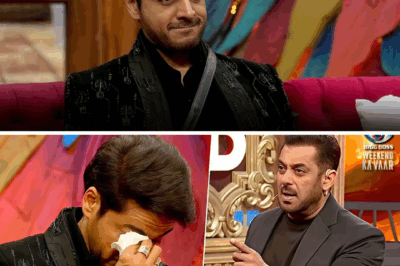
Bigg Boss 19 Shock: Salman Khan Offers Gaurav a Role in His Next Movie
The Bigg Boss house was already buzzing with anticipation as the weekend episode approached. Contestants were aware that Salman Khan’s…

Amitabh Bachchan Breaks Down Over Dharmendra Ji’s Death: Emotional Tweet Sparks Sensation
The news of Dharmendra Ji’s passing had sent shockwaves through Bollywood and the nation. Among the many mourning the legendary…

Hema Malini Denied Entry at Dharmendra Ji’s Funeral? Emotional Moment Outside Crematorium
The air outside the cremation grounds was thick with grief, curiosity, and tension. News of Dharmendra Ji’s passing had drawn…
End of content
No more pages to load