
The sudden news of Dharmendra’s passing hit Bollywood like a thunderclap, leaving fans across the country in shock. The Man of Steel, the actor whose smile had lit up generations, whose dialogue delivery and charisma had made him a living legend, was gone. Yet, as the initial wave of grief swept through social media and television channels, whispers began to circulate — whispers that promised turmoil behind the carefully curated public mourning. The Deol family, long revered for its unity and cinematic dominance, was suddenly thrust into the glare of scrutiny, and rumors of a double blow shook the foundation of what fans believed to be a seamless legacy.
Inside the quiet confines of the Deol residence, the atmosphere was charged. Esha Deol moved silently through the halls, clutching memories and unspoken emotions as she prepared to honor her father’s last wishes. Dharmendra had always been a private man despite his public persona. His final instructions, now revealed through close family sources, were said to contain unexpected clauses — decisions that caught even the closest relatives off guard. Fans speculated endlessly: Was it a redistribution of wealth? A specific request regarding family dynamics? Or perhaps something even more personal, a symbolic gesture meant to remind the Deols of their shared history and values?
Hema Malini, Dharmendra’s life partner, was at the center of these swirling narratives. The legendary actress, known for her grace and poise, had become an unexpected focal point for controversy. Reports suggested that during Dharmendra’s final rites, she had taken decisions that left his daughters, Esha and Ahana, momentarily sidelined. To the casual observer, it might have seemed like a minor procedural choice. But Bollywood insiders hinted at tension — subtle glances, whispered arguments, and gestures heavy with meaning — gestures that the cameras never captured but the family felt deeply. It was a reminder that behind the polished smiles and ceremonial rituals lay emotions raw, unresolved, and intensely human.
Sunny Deol, the powerhouse actor and eldest son, reportedly experienced a moment of genuine shock during these proceedings. Known for his stoicism on-screen and off, Sunny had always been a protector, the pillar of strength for his younger siblings. Yet, even he could not fully prepare for the surprises that Dharmendra’s last wishes seemed to hold. Friends close to the family described him as quiet, contemplative, moving through the mourning rituals with a heavy heart, yet always aware, always protective. His measured responses contrasted sharply with the whirlwind of rumors, as fans and journalists speculated on every detail, desperate to uncover hidden family truths.
Meanwhile, Ahana Deol, Hema Malini’s daughter, remained an enigmatic figure in the storm. The whispers around her connection to Dharmendra’s 450 crore fortune had fans clamoring for glimpses into her private life — her home, her gatherings, the subtle luxuries that seemed to confirm her link to Bollywood royalty. Yet Ahana’s demeanor during this period was one of quiet dignity. She moved through the ceremonies and private family moments with precision, honoring her father-in-law’s memory without ever drawing attention to herself. It was a stark contrast to the media frenzy, proving that some of the most powerful gestures of devotion never make headlines.
As the Deol family navigated these turbulent days, Bollywood’s social media ecosystem erupted with theories. One persistent narrative suggested that Hema Malini’s actions might have been influenced by something beyond mere family protocol — whispers of a “curse” or the notion of karmic consequences circulated among fans, though insiders repeatedly cautioned against taking such claims literally. Yet, the potency of rumor in the digital age cannot be underestimated. Every gesture, every pause, every arrangement at the funeral was dissected, speculated upon, and debated. The Deols, who had long been accustomed to fame, now faced a different kind of scrutiny: the intimate, the personal, and the speculative.
Esha Deol’s role in fulfilling her father’s final wish emerged as a defining moment. Close sources confirmed that she had quietly ensured Dharmendra’s instructions were honored in a manner both private and profound. The specifics remain closely guarded, but the emotional impact on those present was unmistakable. Tears flowed, not from spectacle, but from genuine reverence — a testament to a daughter’s devotion to a father whose presence had shaped her life. For the Deols, this was a moment of unity, an acknowledgment that while legacy can be complicated, love remains the constant that binds a family together.
Yet even amidst the sorrow, subtle tensions lingered. The interplay between Hema Malini and the other family members, particularly during the rituals, hinted at layers of emotion shaped by decades of shared history. Bollywood insiders noted that the nuances of these interactions — a paused glance, a carefully considered seating arrangement, the allocation of ceremonial duties — were rich with meaning. Fans, hungry for insight, tried to interpret every gesture, every quiet action, yet the true story remained shielded by the very people who lived it. Here, privacy and public curiosity collided, leaving speculation to run rampant, even as the family grieved in a space they hoped would remain sacred.
Behind the scenes, the impact of Dharmendra’s will added another dimension. The legendary actor, meticulous and thoughtful even in his final days, had outlined provisions that surprised many. Some clauses were practical, some symbolic, and all carried the weight of intention. Family members, including Sunny and Bobby Deol, were faced with decisions that tested their unity and resilience. Reports of heated discussions emerged, though details remained largely confidential. These discussions, steeped in respect for Dharmendra’s wishes, highlighted a truth that often goes unnoticed: even in death, the influence of a patriarch or matriarch can shape the dynamics of those left behind.
The media frenzy around these events illustrated a curious phenomenon. While fans mourned the loss of a cinematic icon, the public narrative quickly shifted toward intrigue, speculation, and drama. Every reported glance, every minor interaction, became a headline. Social media amplified both fact and rumor, creating a complex web of perception that the Deols had to navigate carefully. Yet amidst this chaos, moments of genuine emotion persisted. The quiet ceremonies, the subtle acts of honor, the private fulfillment of Dharmendra’s last wishes — these were the moments that truly mattered, even if the world didn’t always see them.
By the end of the first week, the contours of the story had begun to settle, though questions lingered. How had Hema Malini balanced respect for Dharmendra’s memory with her own personal emotions and familial responsibilities? How had Sunny and Bobby Deol processed the surprises in the will while managing public scrutiny? And what role had Esha and Ahana played in preserving the family’s integrity and honoring their father’s intentions? Each answer, when revealed, would add another layer to a narrative already rich with emotion, history, and human complexity.
The story of Dharmendra’s passing, his last wishes, and the Deol family’s navigation of grief, legacy, and public scrutiny is more than a tale of celebrity. It is a study in human emotion, the bonds of family, and the weight of responsibility. Behind every rumor, every speculation, there exists a family grappling with profound loss while attempting to honor a man whose life defined both their personal histories and the cultural imagination of an entire nation. In the quiet, away from cameras and headlines, they grieve, reflect, and act — each gesture a testament to love, loyalty, and the intricate dance of human relationships that endures even in the shadow of legend.
As the days unfolded after Dharmendra’s final farewell, Bollywood insiders began piecing together the subtle tensions that had gone unnoticed by the casual observer. One of the most talked-about incidents was Hema Malini’s controversial actions during the rites. According to sources close to the family, there were moments when Dharmendra’s daughters, Esha and Ahana, were momentarily set aside in ceremonial proceedings. While some speculated this was intentional exclusion, others suggested it was an emotionally charged response to decades of complex family dynamics. Whatever the truth, the result was the same: whispers of discord began to circulate, amplified by the relentless scrutiny of media outlets and social platforms.
Fans were quick to notice every nuance. Viral photos captured fleeting expressions — the tight press of Hema’s lips, Sunny’s restrained nod, and Esha’s quiet composure. Observers debated whether these gestures reflected unresolved tension, generational differences, or simply the immense weight of grief. Every movement became symbolic: the careful placement of hands during the ritual, the distance maintained between certain family members, the pauses that seemed longer than necessary. In the world of Bollywood, where every glance can spark headlines, the Deols’ private mourning became a canvas for speculation and intrigue.
Meanwhile, Esha Deol quietly carried out her father’s last wishes in a manner that was both profound and understated. Unlike the public displays often associated with celebrity funerals, her actions were intimate, deliberate, and deeply personal. Sources revealed that she meticulously ensured Dharmendra’s final instructions were followed, from the distribution of personal mementos to the observance of particular family traditions that had been important to him. Every act, though unseen by cameras, resonated with emotion and reverence. It was a private testament to her father’s influence and a clear signal that some of the most powerful stories unfold far from public view, where love, loyalty, and respect define the narrative.
Ahana Deol, Hema Malini’s daughter, also played a pivotal role, though in a different capacity. As the heiress associated with Dharmendra’s considerable fortune, she had long been the subject of curiosity and speculation. Fans were eager to understand the depth of her connection to the legendary wealth — the 450 crore empire that had grown alongside Bollywood history itself. Ahana’s approach during the mourning period was quiet but commanding. She attended family gatherings with measured grace, navigating complex emotions while maintaining a sense of dignity that seemed almost instinctual. Her presence reminded the world that legacy is not just about material wealth; it is also about emotional intelligence, discretion, and the ability to honor history without succumbing to spectacle.
Adding further intrigue were reports of internal discussions sparked by Dharmendra’s will. The legendary actor, meticulous and thoughtful until the very end, had included instructions that even seasoned family members found surprising. Some clauses were practical, addressing financial and logistical matters. Others were symbolic, meant to preserve traditions and convey moral lessons. These revelations sparked heated debates among the Deols, particularly between Sunny, Bobby, and Hema Malini. Observers noted that these discussions, though private, carried the weight of decades-long familial relationships, highlighting both loyalty and the occasional friction that naturally arises when multiple generations converge under a shared inheritance.
Bollywood insiders were particularly fascinated by the so-called “double blow” that allegedly struck the Deol family. While the exact nature of these events remains partially shrouded in secrecy, rumors hinted at a mix of emotional, logistical, and symbolic challenges that tested the family’s unity. Some speculated that Hema Malini’s decisions during the rituals, combined with the unexpected clauses in the will, created a perfect storm of tension. Others pointed to the pressures of maintaining public image while grieving privately as a source of strain. In either case, the events underscored a universal truth: the intersection of legacy, grief, and public scrutiny is rarely straightforward.
Despite the swirling rumors, certain truths became clear. Esha’s quiet fulfillment of her father’s wishes was a gesture that transcended controversy. It demonstrated that honor and love often manifest in subtle, almost invisible ways — actions that require no audience, no applause, only understanding and empathy from those who witness them directly. Ahana’s composure, meanwhile, reinforced the importance of discretion and measured response, particularly when personal wealth, public expectation, and familial legacy converge. Together, the sisters’ actions offered a blueprint for navigating complex emotional landscapes with grace and intelligence.
Social media, as expected, exploded with commentary. Fans debated, theorized, and sometimes exaggerated every nuance of the Deols’ private mourning. Hashtags trended for days, ranging from expressions of grief to speculation about family dynamics and inheritance. Every report was dissected, every video replayed, every photograph scrutinized. Yet, amid this digital cacophony, the family remained steadfast in their approach, prioritizing private mourning and intimate remembrance over public spectacle. Their actions, though often overshadowed by media frenzy, spoke volumes about the depth of their bonds and the enduring influence of Dharmendra’s life and values.
As the initial wave of mourning subsided, attention gradually shifted to the legacy itself. Dharmendra’s impact on Indian cinema was monumental, yet the lessons embedded within his final instructions carried a different kind of weight — one rooted in personal responsibility, family cohesion, and the nuanced management of emotion. Observers noted that these lessons were being absorbed not just by his children but by the wider industry, serving as a reminder that celebrity, while glamorous, comes with profound moral and familial obligations.
The narrative of Dharmendra’s final days, the private fulfillment of his last wishes, and the subtle tensions during his farewell rituals illustrates a timeless truth: grief and legacy are inseparable. The Deol family’s experience demonstrates that the private acts of love, honor, and duty often speak louder than public gestures or social media declarations. In the quiet corners of their home, away from cameras and headlines, the family navigated sorrow, fulfilled promises, and preserved a sense of dignity that will echo for generations.
Even as rumors continue to swirl — about Hema Malini’s choices, Sunny’s reactions, and the mysterious “double blow” — one fact remains undeniable: the Deol family, bound by blood, legacy, and love, faced one of the most challenging periods in their history with courage, discretion, and unwavering commitment to their father’s memory.
As the days turned into weeks, the Deol family gradually sought equilibrium between private mourning and public expectation. The glare of media attention showed no signs of fading, but the family remained disciplined, choosing to honor Dharmendra’s memory in ways that reflected his values rather than spectacle. Esha Deol, having quietly executed her father’s final wishes, became a subtle anchor within the family. Her approach was deliberate: no grand gestures, no statements for the press, only careful observation and measured action. Those closest to her noted that she seemed almost to channel her father’s presence, as if Dharmendra himself guided her decisions through the intricate web of emotions, obligations, and traditions that defined this period.
Ahana Deol, by contrast, occupied a more public yet equally composed role. While rumors and speculation often painted her in the spotlight of Bollywood curiosity, she maintained her composure, embodying a sense of maturity that belied her age. Sources revealed that she coordinated many of the logistical aspects of family gatherings and memorials, ensuring that events flowed smoothly while remaining respectful to her father’s legacy. In doing so, she reinforced the importance of discretion, diplomacy, and grace, even in a climate saturated with gossip and conflicting narratives. Every decision, from seating arrangements at ceremonies to the careful distribution of memorabilia, was guided by a desire to balance respect, tradition, and the sensitivities of a grieving family.
One of the most discussed moments during this period was the so-called “double blow” that had allegedly shaken the Deol family. While details remained sparse, insiders suggested it involved two intersecting events that compounded grief with unexpected challenges. First was the revelation of the exact contents of Dharmendra’s will, which included clauses that surprised even the closest relatives. The instructions were intricate, reflecting his meticulous nature, and required careful interpretation. Second was Hema Malini’s unexpected decisions during the funeral rites, which some perceived as a deviation from tradition. Together, these events generated tension, curiosity, and, for some, a sense of unresolved mystery.
Yet beneath the speculation lay the quiet, profound acts of devotion that defined the family’s mourning. Esha’s actions, largely invisible to the public eye, emphasized the importance of personal fidelity over public recognition. She ensured that each detail of her father’s instructions was honored, from family traditions to symbolic gestures, embodying the lessons he had imparted during his lifetime. Ahana, meanwhile, bridged the gap between tradition and public perception, handling both ceremonial duties and private responsibilities with remarkable composure. Together, the sisters became living testaments to the enduring values of respect, loyalty, and understated leadership within the Deol family.
Media commentary continued to swirl around Hema Malini and Sunny Deol. Hema’s choices, whether motivated by emotion, strategy, or intuition, prompted discussions across platforms. Observers debated the propriety of her actions and speculated on the possible ramifications for the family’s internal dynamics. Sunny Deol, meanwhile, was frequently depicted as caught between his mother’s legacy, his own public image, and the obligations to his siblings. Yet, close sources indicated that he navigated these pressures with a careful blend of assertiveness and restraint, ensuring that his father’s legacy was honored without unnecessary public conflict.
Amid this environment, fans were treated to rare glimpses of private sentiment. Photographs capturing subtle exchanges — a supportive hand on a shoulder, a shared glance of understanding, or a silent moment of reflection — revealed the depth of the family’s connection. Social media may have amplified speculation, but it could not capture the full spectrum of emotion experienced behind closed doors. What the public saw as tension was often a complex choreography of grief, respect, and love. Each interaction, though scrutinized and interpreted through countless lenses, was grounded in the enduring bonds of family and the profound influence of a father whose impact extended far beyond cinematic achievements.
The enduring fascination with Dharmendra’s legacy, including the rumored controversies and Hema Malini’s unconventional choices, underscored a broader cultural narrative: the tension between private emotion and public perception. Fans, social commentators, and insiders alike speculated about motives, intentions, and possible consequences, yet few could appreciate the nuance inherent in private grief. In many ways, the Deol family’s experience highlighted a timeless truth about celebrity and legacy: the most profound moments of devotion, respect, and emotional truth often occur away from the cameras, in silence and reflection.
Esha and Ahana’s contrasting approaches — one quietly fulfilling a father’s last wishes, the other managing logistics, ceremonies, and family expectations — provided a blueprint for balancing visibility with discretion. Both demonstrated that honoring a legacy requires more than public appearances or social media statements; it requires careful attention to detail, emotional intelligence, and the courage to make difficult decisions without seeking validation. In this sense, the sisters exemplified a modern interpretation of dharma — the moral and familial duty to preserve, respect, and honor.
The Deol family’s story during this period is a reminder that legacy is not only about wealth, status, or public acclaim. It is about memory, connection, and continuity. Dharmendra’s meticulous instructions, combined with the measured responses of his children, ensured that his influence remained alive, tangible, and instructive. It also highlighted the enduring relevance of personal action over public perception. While headlines, speculation, and controversy dominated the media, the true measure of devotion, loyalty, and respect was expressed quietly, deliberately, and with emotional precision.
As the weeks passed, the initial shock and speculation gradually gave way to a broader understanding of the family’s dynamics and the significance of their actions. Fans came to appreciate that Esha’s quiet fulfillment of her father’s wishes, Ahana’s composed stewardship of responsibilities, and the careful orchestration of ceremonies all contributed to preserving Dharmendra’s legacy in a manner consistent with his values. Even Hema Malini’s controversial decisions, once seen purely as points of tension, could be reframed as deeply personal choices reflecting the complexity of grief, tradition, and family loyalty.
In retrospect, the events surrounding Dharmendra’s passing and the family’s subsequent actions offer lessons for anyone navigating the intersection of legacy, public perception, and private emotion. True devotion, it seems, is rarely performed for an audience. It is the unobserved acts — the fulfillment of wishes, the careful orchestration of ceremonies, the quiet management of family expectations — that carry the most weight. The Deol family’s story reminds us that even amid rumor, speculation, and controversy, the bonds of love, loyalty, and respect endure, shaping actions and decisions in ways that public narratives often fail to capture.
By the time the media cycle began to shift its focus, the Deol family had already navigated the most challenging moments of their mourning. They had honored Dharmendra, managed internal tensions, and demonstrated, through action rather than statement, that legacy is more than wealth, fame, or controversy. It is lived through integrity, commitment, and an unwavering respect for those who came before. In this sense, the true story of Dharmendra’s final days and the family’s response is not one of scandal or drama, but of love, fidelity, and the quiet power of honoring a life well-lived.
News

Bigg Boss 19 Shocker: Tanya Throws Ink at Farrhana
The Bigg Boss 19 house had been simmering with tension all morning. The contestants moved around cautiously, aware that the…
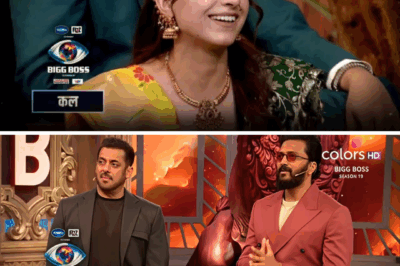
Bigg Boss 19 Weekend Ka Vaar Promo: Shocking Eviction Revealed
The Bigg Boss 19 house had never felt so tense. The morning sunlight filtered through the windows, casting long shadows…

Shock in Dharmendra’s Family as Last Will Revealed
The room was heavy with anticipation. A single, unassuming envelope sat on the polished wooden table in Dharmendra’s family home,…

Bigg Boss 19 Shocker: Farrhana Throws a Mug at Tanya
The Bigg Boss 19 house had always been a pressure cooker of emotions, but today, the atmosphere was thick with…
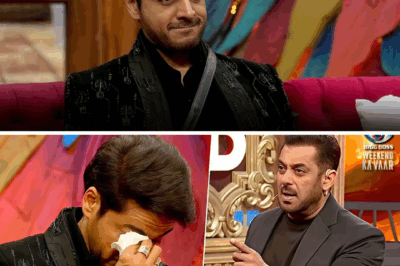
Bigg Boss 19 Shock: Salman Khan Offers Gaurav a Role in His Next Movie
The Bigg Boss house was already buzzing with anticipation as the weekend episode approached. Contestants were aware that Salman Khan’s…
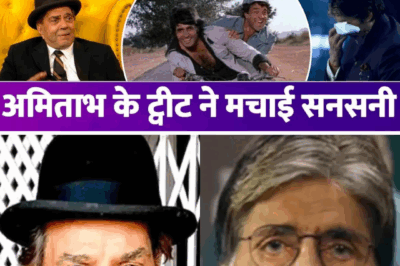
Amitabh Bachchan Breaks Down Over Dharmendra Ji’s Death: Emotional Tweet Sparks Sensation
The news of Dharmendra Ji’s passing had sent shockwaves through Bollywood and the nation. Among the many mourning the legendary…
End of content
No more pages to load