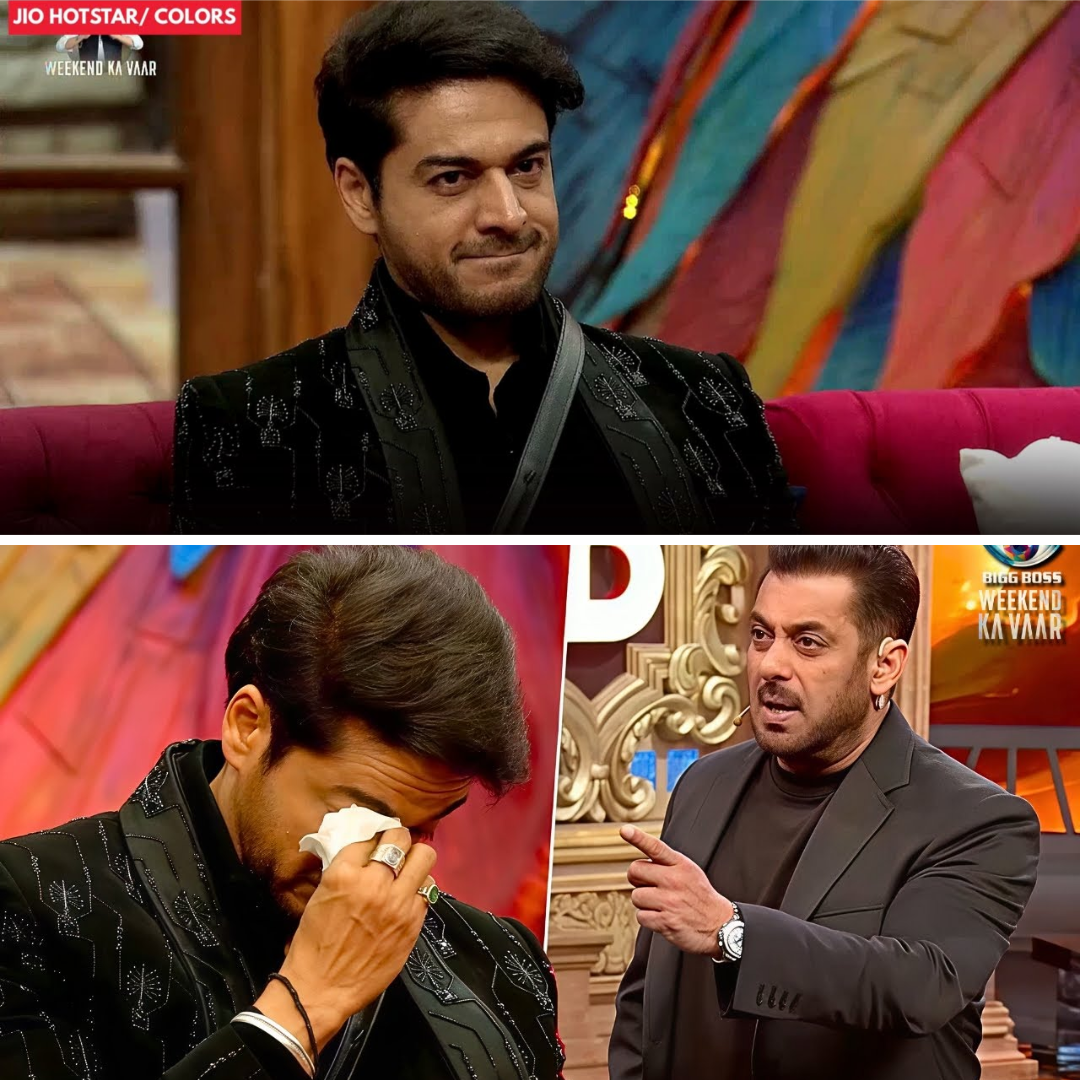
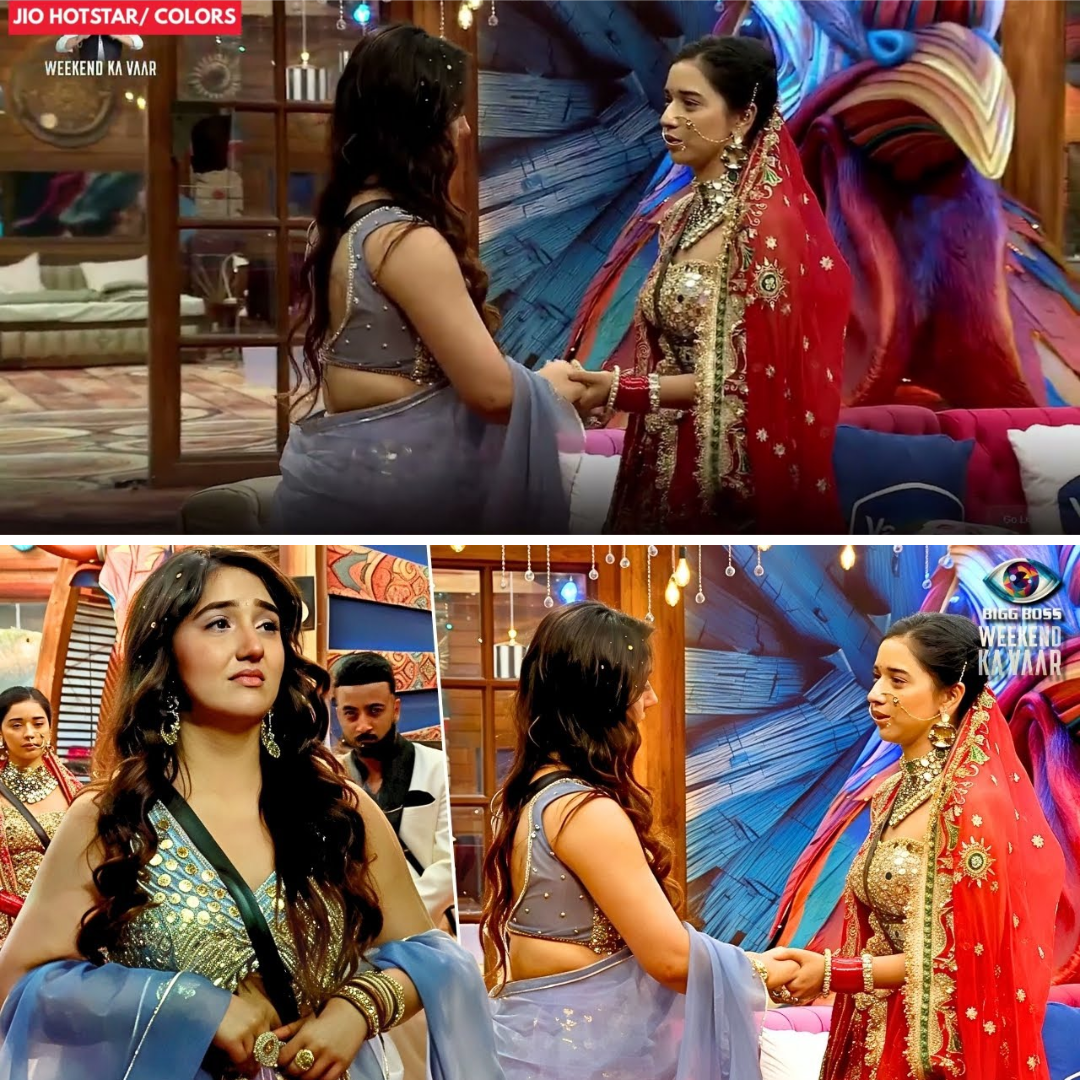
Drama Unfolds in Bigg Boss 19 Episode 97 as Tanya Faces Accusations of Being FAKE
The Bigg Boss 19 house was charged with tension from the very moment the day began. Episode 97 promised drama, but no one could have anticipated just how intense it would get. Tanya, a contestant known for her strategic mind and calm demeanor, suddenly found herself at the center of a storm. The task for the day was designed to test teamwork, honesty, and adaptability, but what unfolded quickly became a test of human emotions, trust, and perception.
As the contestants gathered in the living area, the atmosphere was electric. Whispers flitted across corners of the house, eyes darted suspiciously, and every gesture seemed loaded with meaning. Tanya, unaware of the brewing collective sentiment, approached the task with her usual composure. But soon, subtle remarks, sidelong glances, and pointed comments began to pile up. The other housemates, each observing her behavior, started expressing doubts about her intentions, questioning whether her participation and demeanor were genuine or manipulated for the cameras.
The first spark of confrontation appeared during the initial instructions of the task. Bigg Boss explained the rules, emphasizing honesty, collaboration, and transparency. The contestants were to complete a series of challenges while maintaining trust and cooperation. It sounded straightforward, yet as soon as the task began, cracks started to show. Tanya’s actions, which had been calculated and deliberate, were interpreted differently by each participant. Small gestures—pauses, looks, subtle expressions—were magnified in the intense environment of the house, leading to the first murmurs of discontent.
“Is she really participating properly, or is this another act for the camera?” one housemate whispered to another. The comment, intended as a quiet observation, quickly traveled through the room. Soon, multiple contestants were quietly agreeing, nodding, and sharing anecdotes that painted Tanya in a suspicious light. The collective energy shifted. What had been a test of teamwork now became a stage for judgment, perception, and subtle accusations. Tanya, unaware of the escalating whispers, continued her efforts, focusing on the task while the environment around her became increasingly hostile.
As the challenges progressed, tensions rose. Minor disagreements that would usually be brushed off became points of contention. Tanya’s suggestions during the task, which were meant to streamline progress, were interpreted as manipulation or self-serving behavior. The other housemates began to vocalize their opinions more openly. “She’s being fake,” someone muttered under their breath, soon repeated by another, until the phrase “Tanya is fake” began circulating audibly. In a matter of minutes, the subtle whispers transformed into a collective assertion, each contestant reinforcing the perception of duplicity.
The turning point came when Bigg Boss called for a midway review. Contestants were asked to express how they felt about each other’s participation. Tanya, still focused on completing the task efficiently, was suddenly confronted with direct accusations. One by one, housemates expressed their suspicions, framing her actions as disingenuous. “I feel she’s not being genuine,” said one. “Every move seems calculated,” added another. The room, once filled with anticipation, now vibrated with tension, unease, and a hint of betrayal. Tanya’s composure wavered slightly, a flicker of shock crossing her face as she realized the depth of consensus against her.
The drama escalated rapidly. Tanya tried to defend herself, explaining her intentions, her strategy, and her genuine effort to complete the task. But the unified front of the other contestants made it difficult for her words to penetrate. The task, originally designed as a measure of collaboration, had transformed into a crucible for trust, perception, and emotional resilience. Viewers at home witnessed an emotional rollercoaster: Tanya’s calm slowly cracking under pressure, the housemates’ accusatory stance intensifying, and the underlying tension making each interaction feel like a battle of wills.
Every camera angle captured subtle nuances—nervous gestures, hesitant glances, and quiet sighs—painting a vivid picture of the emotional complexity within the house. Tanya, who had always relied on careful observation and strategy, found herself navigating a minefield of assumptions. Every move she made was analyzed, misinterpreted, or criticized, amplifying the sense of isolation and scrutiny. The task that had started as a neutral challenge had become a stage for social judgment, where perception often outweighed intent.
Fans watching the episode were immediately drawn into the drama. Social media exploded with speculation, support, and debate. Clips of Tanya defending herself went viral, while discussions about the fairness of the housemates’ judgment flooded platforms. The intensity of the accusations—calling her FAKE in front of everyone—evoked empathy, outrage, and curiosity among viewers. Was Tanya truly pretending, or were the housemates projecting insecurities and strategy onto her behavior? The episode blurred the lines between reality, perception, and emotional narrative, making each scene a must-watch moment.
Despite the mounting pressure, Tanya attempted to maintain professionalism and focus. She addressed each accusation calmly, presenting her actions and motives clearly. Yet, the collective energy of the housemates—each reinforcing the narrative that she was FAKE—made it almost impossible to change the perception within the room. The task’s progress was affected, as cooperation faltered and emotional strain began influencing decision-making. This episode showcased the psychological complexity of Bigg Boss: in a confined space, with constant observation, trust becomes fragile and perception becomes reality.
By the final phase of the task, Tanya’s resilience was tested. Emotional strain, combined with the persistent accusations, forced her to confront not only the housemates’ judgments but also her own self-assessment. Viewers saw a side of her rarely visible in previous episodes: vulnerability, determination, and the struggle to assert truth in the face of collective skepticism. The episode ended with an unresolved tension, leaving both the contestants and the audience in suspense. Tanya’s reputation in the house had been questioned, and the ripple effects of Episode 97 were set to influence the dynamics for days to come.
As the task progressed deeper into Episode 97, the atmosphere in the Bigg Boss 19 house became increasingly charged with tension. Tanya, despite her best efforts to participate genuinely, found herself under relentless scrutiny. Every suggestion she made was dissected by the housemates, every action interpreted as manipulative or self-serving. The initial whispers had grown into bold statements, with the repeated chant of “Tanya is fake” echoing through the house, creating a palpable sense of isolation for her.
The other contestants, each with their own strategy and stakes in the game, were quick to capitalize on the tension. Some subtly questioned her choices during the task, planting seeds of doubt among others. “Why is she doing that now? It doesn’t make sense,” one housemate remarked, drawing nods and murmurs of agreement. The group psychology at play was evident: when suspicion is voiced by one, it quickly multiplies, gaining momentum until it feels like the unanimous truth. Tanya’s efforts to clarify her intentions often fell on deaf ears, as pre-existing perceptions overshadowed objective assessment of her actions.
Emotional confrontations began to escalate as small disagreements became public. During a section of the task where coordination was essential, Tanya’s recommendation for a strategy sparked debate. Some housemates claimed she was seeking personal advantage, while others argued she was genuinely trying to help the team. Voices raised, tempers flared, and what should have been a collaborative discussion turned into a heated argument. The cameras captured every nuance: Tanya’s calm reasoning juxtaposed with the accusatory gestures of her peers, the quiet tension between housemates who remained neutral, and the shifting alliances forming around the narrative that Tanya was FAKE.
At one point, Tanya confronted the group, her voice tinged with frustration. “I am doing exactly what the task requires,” she said, looking each housemate in the eye. “I am not pretending. I am participating fully.” Her words, however, were met with skepticism. Some housemates shook their heads, others exchanged glances as if to silently affirm, “We know the truth.” The episode showcased the complexity of social dynamics under pressure: perception often outweighs reality, and emotional narratives can dominate facts.
The task itself became secondary to the unfolding drama. Housemates, caught in the whirlwind of suspicion, began to make mistakes, miscoordinate, and question each other’s motives. Tanya, trying to maintain focus, struggled to navigate not only the physical challenges but also the emotional minefield surrounding her. Each camera angle captured these tensions in raw detail: beads of sweat, furrowed brows, whispered conversations, and fleeting expressions of doubt and accusation. The production emphasized these moments, heightening the intensity for viewers at home.
Viewers were drawn into the emotional turmoil, empathizing with Tanya’s predicament while scrutinizing the housemates’ behavior. Social media exploded with support for her, with fans analyzing clips and debating whether the accusations were fair or strategic. Hashtags surged, trending topics emerged, and online discussions speculated about every nuance of body language, tone, and reaction. This episode highlighted a critical aspect of Bigg Boss: the audience is as much a participant as the contestants, interpreting and influencing perception in real time.
Amid the chaos, Tanya’s resilience was tested. She alternated between calm explanations and visible frustration, trying to assert her authenticity while managing the emotional strain. The audience witnessed her inner conflict: a mix of hurt, determination, and strategic thinking. In one particularly intense moment, she sat silently in the living area, processing the barrage of criticism. The cameras lingered, capturing the weight of isolation and emotional pressure she endured. This vulnerability made her both relatable and admirable to viewers, who understood the psychological challenge of being surrounded by judgment and suspicion.
The housemates, meanwhile, continued to reinforce their stance. Some explicitly voiced their distrust, citing specific actions Tanya had taken earlier in the task as evidence. Others maintained a more subtle approach, using body language, tone, and side comments to influence the group’s perception. The collective behavior created an environment where Tanya’s every move was scrutinized, debated, and interpreted as confirmation of the label “FAKE.” The episode underscored how group dynamics in Bigg Boss can amplify conflict, magnifying minor actions into major points of contention.
In response, Tanya attempted to redirect focus to the task itself, emphasizing teamwork and collaboration. She reminded housemates of the objectives, highlighted strategies, and tried to mediate disputes. Yet, the emotional undercurrent was too strong; the accusations had already created a lens through which her actions were interpreted. Even neutral or helpful gestures were seen as manipulative, leaving Tanya in a constant state of defensive navigation. The episode illustrated the delicate balance contestants must maintain: performing well in tasks while managing social perception, a challenge unique to the Bigg Boss environment.
As the task neared completion, the tension reached its peak. Tanya’s frustration became more apparent, but so did her resilience. She refused to leave the task unfinished, determined to see it through despite the criticism. Her housemates, meanwhile, remained steadfast in their perception, occasionally offering reluctant acknowledgment of her contribution, but never fully conceding the accusation of being FAKE. The interplay of perseverance, judgment, and emotion created a compelling narrative that kept viewers riveted.
The culmination of the episode was a moment of public declaration by the housemates. Each voiced their opinion regarding Tanya’s behavior, solidifying the narrative that had built throughout the task. Tanya, visibly shaken but composed, responded with honesty, reiterating her commitment to participation and transparency. The scene was a masterclass in emotional storytelling, highlighting themes of resilience, perception versus reality, and the complexity of human relationships under scrutiny.
By the end of Episode 97, the house was left divided, and Tanya’s role in the social hierarchy of the Bigg Boss 19 house was recalibrated. The drama generated ripples that would influence future interactions, alliances, and strategies. Viewers, meanwhile, were left eagerly speculating about the next confrontation, the potential for redemption, and how Tanya would navigate the delicate balance of trust, perception, and performance in the episodes to come.
https://youtu.be/_4JgfXfgEzo
After the task concluded in Episode 97, the atmosphere in the Bigg Boss 19 house remained tense, heavy with unspoken judgments and lingering emotions. Tanya, having endured the public accusations of being “FAKE,” retreated momentarily to the privacy of her personal space to collect her thoughts. The cameras captured her silent reflection—a mixture of frustration, hurt, and determination. For viewers, this moment was a rare glimpse into the vulnerability behind the composure Tanya had displayed throughout the task.
The aftermath of the task saw housemates adjusting their strategies. Some continued to reinforce the narrative of Tanya being FAKE, subtly influencing others through glances, whispered comments, and casual remarks. Others, perhaps feeling remorse or recognizing Tanya’s genuine efforts, began to express quiet support. These varied reactions highlighted the complex social dynamics of the Bigg Boss house: alliances, perceptions, and emotional reactions all intermingled, creating a web of tension that extended beyond the task itself.
Tanya, however, was not passive in response. She engaged in thoughtful conversations with fellow contestants, explaining her perspective, detailing her intentions during the task, and emphasizing her commitment to teamwork. Her resilience and transparency gradually began to shift some opinions. Certain housemates who had initially accused her of dishonesty now hesitated, caught between the original narrative and the undeniable evidence of Tanya’s genuine participation. The episode underscored a key lesson in Bigg Boss: perception may dominate initially, but consistent behavior can challenge and change narratives over time.
Emotions in the house fluctuated between tension and tentative understanding. Tanya’s quiet moments of reflection contrasted with the animated discussions among the other contestants. Her ability to remain composed, articulate, and strategic in the face of collective criticism earned her respect, even from some of the housemates who had been the loudest in their accusations. The audience witnessed the raw power of emotional resilience—how staying true to oneself under pressure can influence group perception and, over time, shift dynamics within a high-stakes environment.
Meanwhile, the cameras captured subtle but telling interactions. Housemates exchanged meaningful glances, whispered quietly to each other, and occasionally paused to reconsider prior judgments. These moments, often overlooked in casual viewing, revealed the intricate psychology of the Bigg Boss house: alliances are fragile, perceptions can be manipulated, and emotional reactions are constantly evolving. Tanya’s experience became a catalyst for self-reflection among her peers, as they began to question whether their collective labeling had been fair or influenced by strategy, bias, or misinterpretation.
The public reaction outside the house mirrored the tension within. Social media buzzed with discussions, debates, and fan reactions. Supporters of Tanya flooded platforms with comments defending her integrity, analyzing her behavior, and critiquing the housemates’ collective judgment. Other fans engaged in heated debates, dissecting every action, gesture, and word from Episode 97. The blend of real-time reactions and post-episode analysis added another layer to the drama, illustrating how Bigg Boss extends beyond the house and into the court of public opinion, where every contestant’s actions are scrutinized and judged by millions.
In private moments, Tanya reflected on the task and the accusations. She acknowledged the intensity of the challenge, the pressure of public judgment, and the emotional toll of being labeled FAKE by the entire house. Yet, these reflections also reinforced her determination to remain authentic and strategic. The episode portrayed her not just as a contestant facing criticism, but as a figure navigating complex social pressures, balancing self-assertion with diplomacy, and maintaining focus under the spotlight of scrutiny.
The reactions of the other housemates in the post-task period varied. Some doubled down on their accusations, discussing the task repeatedly and reinforcing their initial judgments. Others softened, recognizing Tanya’s consistent efforts and beginning to see the task through her perspective. These contrasting behaviors set the stage for evolving dynamics in the coming episodes: new alliances, potential reconciliations, and the possibility of future confrontations. The house had been fundamentally shaken, and the events of Episode 97 left a lasting imprint on the social hierarchy and interpersonal relationships.
Tanya’s emotional journey resonated with viewers for its depth and authenticity. Her ability to confront collective judgment while maintaining composure, reason, and clarity made her a compelling figure in this episode. The narrative of being called FAKE, challenged by accusations yet responding with integrity, highlighted themes central to Bigg Boss: the tension between perception and reality, the challenges of social judgment in a confined space, and the power of resilience under pressure.
As the day drew to a close, the house settled into a quiet, reflective mood. Tanya, while still processing the events, began to engage in conversations aimed at reconciliation and understanding. She reached out to those who had questioned her behavior, seeking dialogue and clarification. These efforts, combined with her continued authenticity, hinted at potential shifts in perception and alliances in future episodes. The drama of Episode 97 was far from over—it had set the stage for evolving relationships, deeper emotional confrontations, and continued tests of strategy and resilience.
The episode concluded with a lingering sense of anticipation. Fans were left wondering how the housemates would navigate the fallout, whether Tanya’s position in the social hierarchy would strengthen or weaken, and how future tasks might unfold in light of the emotional turbulence from Episode 97. The narrative arc had effectively balanced tension, emotional resonance, and strategic gameplay, ensuring that viewers remained hooked and eager for the next episode.
Ultimately, Episode 97 of Bigg Boss 19 was a masterclass in social dynamics, emotional storytelling, and human psychology under pressure. Tanya’s experience of being collectively called FAKE highlighted the fragility of perception, the impact of group consensus, and the enduring power of authenticity. The consequences of the task would ripple through the house in the days to come, shaping alliances, challenging assumptions, and testing the resilience of every contestant. For viewers, it was a gripping, emotionally charged episode that blended drama, strategy, and raw human emotion—defining the essence of Bigg Boss 19.